

Casino entertainment has changed considerably over the past century, yet some of its most recognizable games remain remarkably familiar.
Blackjack still revolves around reaching 21, roulette retains its spinning wheel, and baccarat continues to attract attention with its straightforward card comparisons.
Even slot machines, despite their increasingly elaborate designs, preserve the basic concept of matching symbols across reels.
Four Games That Kept Their Shape
Blackjack: A Card Game That Has Barely Changed Its Identity
Blackjack’s history stretches back several centuries.
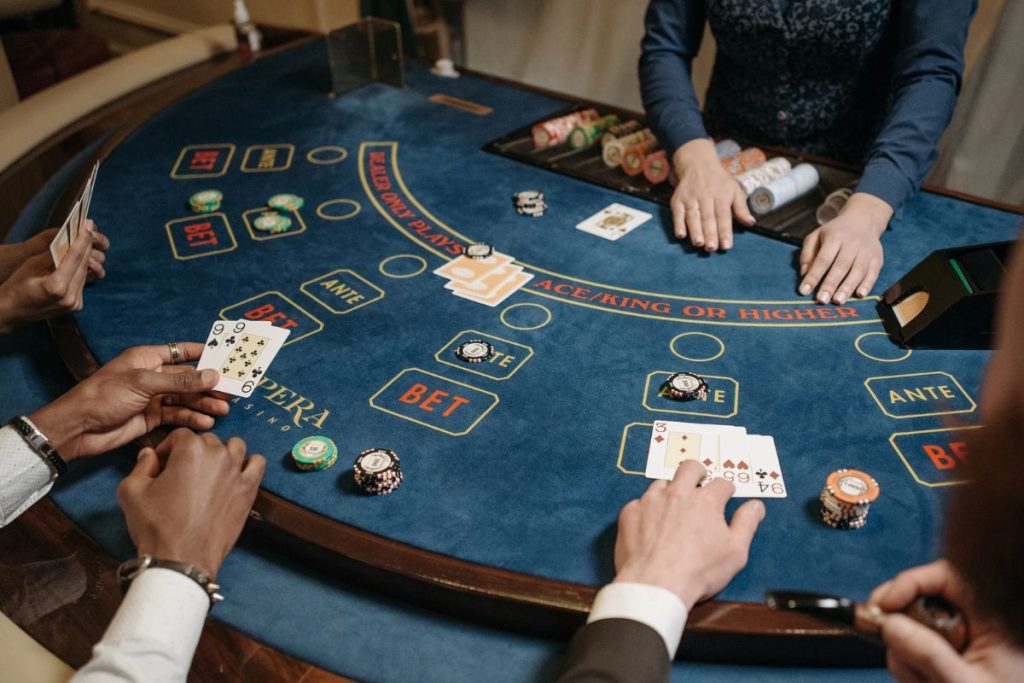
Early versions of twenty-one) appeared in Europe, including the Spanish game veintiuna, before the format developed into the blackjack commonly recognized today.
Over time, the game crossed the Atlantic and became a familiar presence in American casino culture. Despite changes in table layouts and card-dealing methods, blackjack’s central objective has remained the same.
Part of blackjack’s longevity comes from its balance between chance and decision-making.
Players can choose whether to take another card, stand, double down, or split certain hands.
These decisions create a level of participation that distinguishes blackjack from games determined entirely by random outcomes.
The game’s history also extends beyond casino floors. Books, films, and discussions about probability have helped establish blackjack as a recognizable part of popular culture.
Its enduring appeal lies partly in the fact that the central challenge is easy to understand, even though individual decisions can become surprisingly complex.
Roulette: The Wheel That Became a Casino Symbol
Few casino games have such a recognizable visual identity as roulette.
The numbered wheel, contrasting red and black pockets, and small white ball have remained central to the experience for generations.
Roulette became established in France during the eighteenth century and later spread across European gaming establishments.
During the nineteenth century, the development of the single-zero wheel helped distinguish European roulette from the double-zero version commonly associated with American venues.
These differences remain relevant today, but the basic experience is immediately recognizable across both versions.
Unlike blackjack, roulette does not involve making decisions after the wheel begins spinning.
Its appeal is closely connected to the anticipation created by the wheel’s movement and the uncertainty of where the ball will settle.
The game’s visual simplicity also explains why it translates so easily into digital formats.
Modern roulette interfaces can reproduce the traditional wheel while introducing alternative camera angles, animated displays, and live presentations.
The technology changes the surroundings without requiring the game itself to be reinvented.
Baccarat: From Exclusive Gaming Rooms to Familiar Digital Tables
Baccarat has long been associated with formal casino environments, particularly in Europe.
Its historical development includes several variations, although the version most familiar to contemporary audiences is Punto Banco.
The game centers on comparing two hands, traditionally called Player and Banker, with the objective of obtaining a total closest to nine.
Unlike blackjack, the widely played Punto Banco format involves little decision-making once a hand begins.
Baccarat still has a place at the tables of New York’s casino resorts, and it has become one of the more familiar card games on players’ phones there too.
The way the gaming providers present it, alongside the rest of their libraries, gets its own section in the full review on New Game Network.
Baccarat’s cultural reputation is almost as interesting as its mechanics. For decades, it appeared in fiction and cinema as a game associated with elegant surroundings, private rooms, and sophisticated characters.
That image helped establish its identity, but the game itself has become much more accessible in presentation.
Digital tables can display the cards, hand totals, and results without the elaborate physical setting traditionally associated with baccarat.
Its survival demonstrates how a game can retain its recognizable structure while gradually shedding some of the social conventions that once surrounded it.

Slot Machines: How Three Reels Became a Lasting Formula
Slot machines have arguably undergone the most dramatic visual transformation among classic casino games.
Early mechanical machines relied on physical reels, simple symbols, and a lever to begin each spin.
The Liberty Bell machine, developed by Charles Fey in the late nineteenth century, helped establish the three-reel format that would influence generations of later designs.
Electronic components eventually replaced many mechanical functions, allowing machines to introduce new visual effects and more elaborate presentations.
Video technology brought further changes, including animated symbols, themed backgrounds, and additional gameplay features.
The move to software also changed how chance is generated and communicated, a subject explored further in this piece on designing casino-style randomness.
Yet the original concept remains recognizable. Whether a game uses three reels or a more complex arrangement, the central idea of forming symbol combinations continues to connect modern slots with their mechanical predecessors.
The contrast between old and new slot designs also reveals something about changing tastes.
Some games emphasize elaborate animations and multiple features, while others preserve traditional fruit symbols, bells, and simple reel arrangements. Both approaches draw from the same historical foundation.
Why Familiar Mechanics Continue to Matter
The survival of these games is not simply a matter of nostalgia. Their basic mechanics have proved adaptable enough to function in very different environments.
Blackjack offers recognizable decisions within a compact card game. Roulette creates anticipation through a single spinning wheel.
Baccarat relies on straightforward hand comparisons, while slots preserve the familiar sequence of spinning reels and matching symbols.
Each game also carries a distinct cultural identity. Roulette evokes historic European gaming rooms, blackjack is associated with strategy and card tables, baccarat retains traces of its formal origins, and slot machines reflect more than a century of mechanical and digital innovation.
The development of casino entertainment has therefore involved more adaptation than replacement.
New technology has expanded the ways these games can be presented, but it has not eliminated the features that made them recognizable in the first place.
A broader historical examination of games of chance illustrates how different formats have persisted through major cultural and technological changes.
The Value of Keeping Classic Games Recognizable
The continued presence of blackjack, roulette, baccarat, and slots suggests that innovation does not always require abandoning familiar ideas.
Modern casino games can introduce new visual styles, interactive features, and alternative presentations while preserving their original identities.
In many cases, those familiar foundations provide the connection between different generations of players.
What has changed most dramatically is the environment surrounding the games.
Mechanical machines have become digital interfaces, traditional tables can appear through live video, and once-exclusive formats are now presented in much more varied settings.
The underlying games, however, remain recognizable. Their histories demonstrate how relatively simple concepts can endure for centuries when they leave enough room for new interpretations.