

When designing your latest game, have you considered coding in a ‘random outcome’ feature: perhaps a spin-the-wheel mini game, randomized loot box, or a streak-win reward?
Developers have become increasingly keen to introduce elements of randomness into their games, which often help to build engagement and promote repeat plays.
But random elements that are designed poorly can erode player confidence, due to a lack of clarity or perceived absence of fairness.
In this article, let’s take a walk through of how you can use randomized features in your designs to enhance playability… without losing player trust or interest.
Why ‘Micro Casino’ Mechanics are a Popular Case Study
One niche that delivers randomness mechanics successfully (usually) is the micro casino.
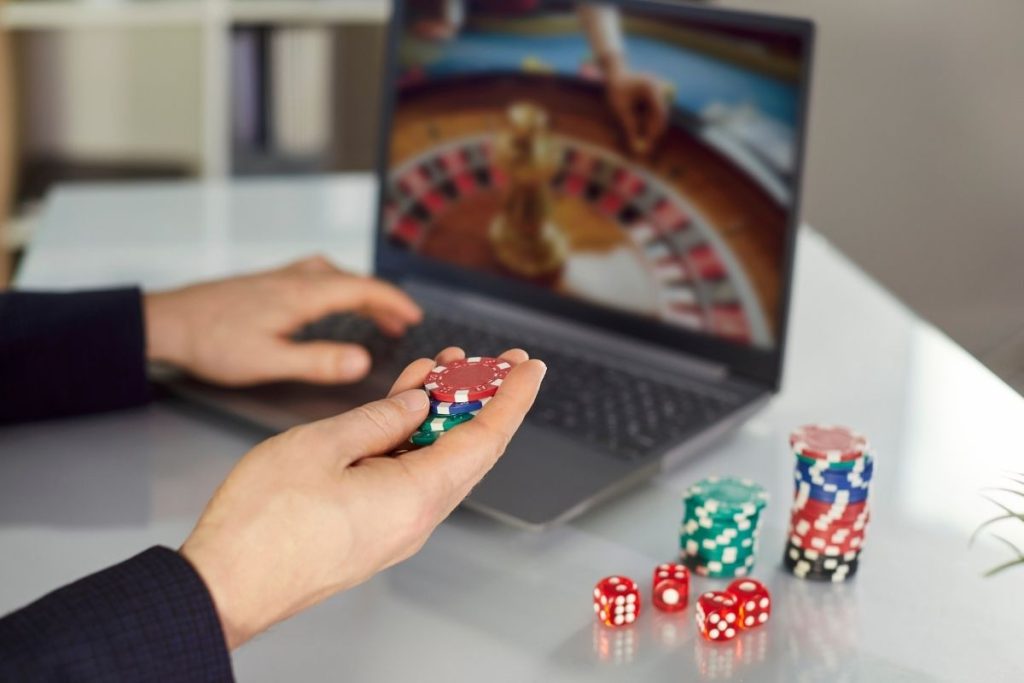
In essence, these are reward loops designed to look like popular casino games, such as roulette or poker.
You’ll no doubt have seen these in popular franchises like GTA, Red Dead Redemption, and even Final Fantasy.
Indeed, the Final Fantasy series has expanded to include ‘gacha’ games, where players utilize in-game currencies to win randomized virtual prizes like weapons, skins, and collectibles.
This gacha style is a representation of the micro casino mechanic, creating feelings of anticipation within the player while ensuring variety and re-playability.
But the key here is responsible design: features that enhance gameplay and reward players, without crossing the line by promoting gambling or unnecessary risk taking.
We took a deep dive into randomness mechanics in our article, ‘Designing for Uncertainty: How Probability Shapes Player Experience’, which analyzes how and why the psychology of randomness is such an important factor in modern browser game design.
Real World Versions of Micro Casino Mechanics
The success of micro-casino mechanics in achieving pure randomness has been replicated in other areas of gaming and entertainment.
One niche that is legally obligated to provide fair and transparent games and bonuses is sweepstakes casino gaming, where terms and conditions are published in full for players to read at their leisure.
Sweepstakes casinos use virtual currencies to enable players to enjoy their games for free, with an additional option to collect monetized coins if they wish – but, fundamentally, these social casinos promote free play.
Each of the steps required to claim free coin bonuses must be detailed in full, while any obstacles that must be overcome – such as wagering requirements – are also stated in black and white.
Readers wanting a clear, consumer-facing example of how these reward mechanics and bonuses are communicated can take a look at The Playoffs’ Crown Coins bonus explainer.
Any randomized mechanic should be explained clearly to players; if they ask, ‘what do I get?’ or ‘what are the rules?’, they should be able to access this information easily with just a tap or a scroll of their screen.
The Trust Problem: When Randomness Feels Rigged
The challenge for developers is in creating an environment in which players don’t feel that randomized features are somehow random or fixed.
They aren’t of course – we’ll guide you through the coding process that ensures these features are completely random and unpredictable later, but often players still need convincing otherwise.
Some of the main red flags include hidden odds, in which the probabilistic chance of a player winning a prize aren’t published, as well as the use of ‘mystery’ phrasing – a source of frustration when the mystery turns out to be underwhelming, or when lower-value items are won consistently.
Games that use win streaks as a reward can often be hampered by low trust on the part of their players, who may be left wondering, ‘is this game rigged?’ if their win streak routinely ends before a prize is won.
One of the key mistakes developers make when coding mini games of chance is to present them as being skill based.
Randomness cannot be ‘beaten’, so animating features in this way should be avoided at all costs.
Micro casinos sometimes lean on the ‘near miss effect’ to create replay value in the minds of their players.
Think of an online slot game with three reels: the symbols in the first two reels match, the player starts to get excited, and then wham: the third symbol is different and their stake is lost.
This ‘near miss’ may persuade them to play again… and again… and again.
Players should be given honest expectations when enjoying random mechanics – not taken for a ride.
Transparency That Works: Odds, Ranges, and Plain English EV
So how can developers build trust in their wheel spins, loot boxes, and random drops?
One way is to actively publish drop rates and rarity bands in your game’s information.
This is actually a legal requirement in some countries; in China, for example, gacha game developers are legally compelled to share drop rate info.
Anyone seeking to release their game as an iOS app via the App Store is obliged to disclose odds if their title contains randomized, purchasable items. This is a requirement detailed in Apple’s App Review Guidelines.
Even in cases in which publishing odds is voluntary, it’s still best practice to reveal to players their chances of landing a) a reward of any kind, and/or b) a specific reward.
An acronym that is often used in gambling circles is EV (Expected Value). This is a measure of how much a bettor can expect to win or lose making a particular wager, if said bet was placed multiple times in the same conditions.
It’s a useful way to frame trust-building when developing randomized game features. You should consider showing sample outcomes of loot boxes, wheel spins etc over multiple plays – not just for one reveal or a single session.
That way, players can visualize their EV and make their game choices accordingly: managing expectations is vital in building trust.
Implementing Randomness in Game Design
Developers should treat true randomness with the utmost importance in their coding.

But there are two perceived levels of ‘risk’ when it comes to randomized features:
- Casual randomness (low risk)
- Monetized randomness (high risk)
Casual randomness applies to game mechanics that are designed to be fun and in which there’s no monetary value to be had – spin a wheel to see if you can win an upgrade for your avatar, for example.
But monetized randomness is another matter entirely; here, it’s essential that features are provably and consistently fair and unpredictable.
A series of developer tools are available to help with that. The web crypto API getRandomValues can generate a truly random number or set of digits in milli-seconds; therefore, it’s a more robust solution than Math.
random, which is NOT suitable for scenarios in which fairness – such as monetized games of risk – are key.
Math.random is known as a ‘pseudo’ random number generator, rather than being one that is cryptographically secured.
It is, therefore, not a viable option for browser games featuring randomized mechanics.
Randomness and Trust in Gaming: A Checklist
So, as you prepare to code your loot box or prize reveal mechanic, consider whether you are building trust with players in a transparent way.
Here’s some handy reminders:
- Disclose odds and/or rarity bands in game information
- Avoid ‘near miss’ psychology
- Ensure your game satisfies developer rules for ‘gambling’
- Implement true randomizing protocol
- Keep your UX honest and consistent
Randomizing In-Game Rewards Responsibly
Fun and fairness are compatible in gaming.
It’s possible to develop games that are enjoyable and exciting while remaining within the borders of fairness and unpredictability – particularly when utilizing the tips outlined in this guide.
Why not brainstorm and test how you would implement randomized rewards in your next build?